


The continued advancement of blockchain technology is creating new opportunities to transform financial systems worldwide. One innovation gaining increasing attention is Real-World Asset (RWA) tokenization, the process of digitally representing ownership or economic rights over physical assets through blockchain-based tokens.
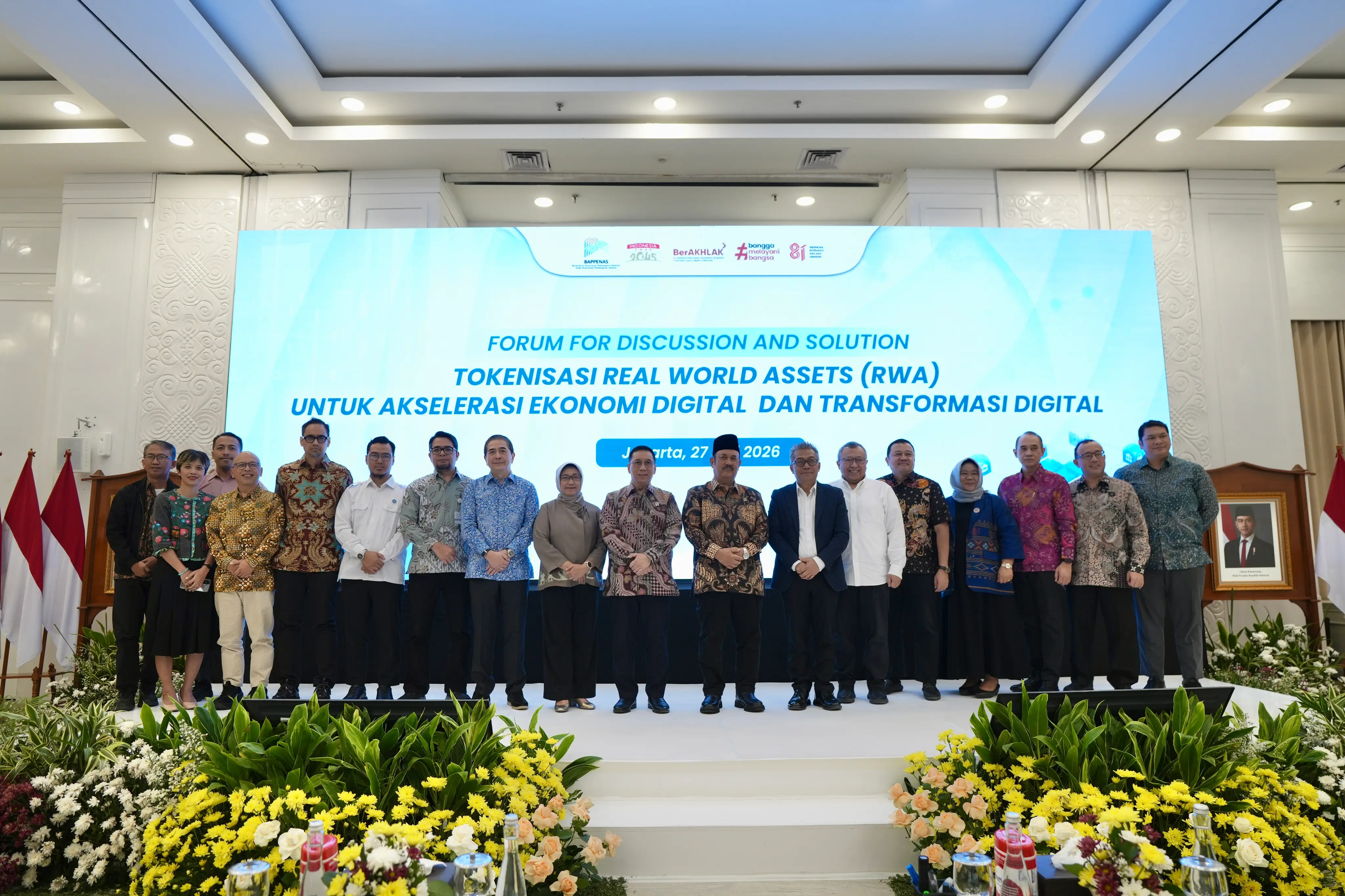
In Indonesia, discussions surrounding RWA tokenization are becoming increasingly relevant. At a forum convened by the Ministry of National Development Planning/National Development Planning Agency (Ministry of PPN/Bappenas), representatives from government, regulatory authorities, industry associations, academia, and the private sector discussed the opportunities, level of readiness, and key challenges associated with developing Indonesia’s RWA ecosystem.
As an association representing Indonesia’s fintech industry, the Indonesian Fintech Association (AFTECH) participated in the forum to contribute perspectives on how RWA tokenization can generate tangible benefits for the national economy.
AFTECH Supervisory Board Chair Arsjad Rasjid emphasized that tokenization is not merely about converting physical assets into digital form. More importantly, it has the potential to create innovative financing alternatives for the real economy.
Through tokenization, assets such as property, infrastructure, commodities, and other productive assets may become accessible to a broader range of investors through more flexible ownership structures. This approach could expand public participation in development financing while creating new funding channels for productive sectors.
AFTECH Secretary General Firlie Ganinduto highlighted that the development of an RWA ecosystem must ultimately deliver meaningful benefits to businesses and communities.
RWA tokenization has the potential to broaden access to financing, particularly for micro, small, and medium-sized enterprises (MSMEs), business owners, and communities across Indonesia that continue to face barriers to formal financial services.
Through asset fractionalization, ownership rights can be divided into smaller units, enabling broader participation in investment opportunities that were previously difficult to access. This could contribute to greater financial inclusion while widening access to a more diverse range of investment instruments.
Beyond improving access to financing, RWA tokenization may offer several other strategic benefits.
It can potentially improve asset liquidity, accelerate transaction processes, enhance transparency, and increase efficiency in asset management. Supported by blockchain technology, transaction records can also become more secure, traceable, and auditable.
These benefits position RWA tokenization as a promising innovation that could strengthen Indonesia’s digital financial ecosystem while supporting national economic development.
Despite its considerable potential, RWA tokenization requires a strong and trusted ecosystem to develop responsibly.
Its implementation will depend on adaptive regulation, robust governance, effective consumer protection, and close collaboration among government institutions, regulators, industry participants, and other stakeholders.
Such collaboration is essential to ensure that technological innovation delivers more than operational efficiency. It must also build trust, manage risks, and create tangible value for the broader public.
Digital transformation continues to create new possibilities within the financial sector. RWA tokenization represents one opportunity to connect assets in the real economy with the rapidly evolving digital ecosystem.
For AFTECH, the development of RWA tokenization is not merely about adopting new technology. It is an opportunity to build a more inclusive financing system, widen access to investment, improve asset liquidity, and support sustainable economic growth.
Through strong collaboration among government, regulators, industry, and other stakeholders, Indonesia has the opportunity to develop a secure, trusted, and responsible RWA ecosystem, one that creates greater value for the real economy and contributes to the country’s Golden Indonesia 2045 vision.


